You’ve just unpacked the last box at your new Wash Park bungalow, and a question starts to nag: who else still has a key to this house? Previous owners, their relatives, a dog walker, a contractor. Most new homeowners assume the answer is to buy new locks. Usually, it isn’t.
Rekeying changes the inside of your existing locks so old keys stop working and a new key does. You keep your hardware, you pay mainly for labor, and the result is just as secure. Here’s how it works, when you need it, and what to check before you book.
Rekeying vs. replacing: what’s the difference?
Think of your lock as a computer and your key as its password. Replacing the lock means buying a whole new computer. Rekeying just changes the password.
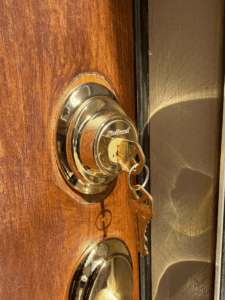
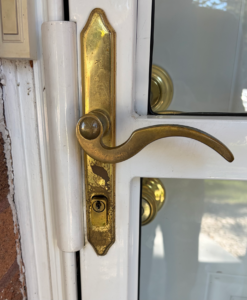
When you rekey, the outside hardware (the knob, lever or deadbolt, called the lockset) stays on the door. The locksmith removes only the cylinder, the part your key slides into, and changes the small pins inside so the lock matches a new key.
- Rekey when: you’ve moved in, lost a key, had a roommate or tenant move out, or want one key for every door.
- Replace when: the lock is broken, badly worn or rusted, the door is getting a style upgrade, or you want a stronger or smart lock.
If the lock still turns smoothly and you like how it looks, there’s no reason to throw it away. For a deeper comparison, see rekeying vs changing locks.
When you should rekey
The day you move in
You have no way of knowing how many copies of your new keys are out there. Rekeying every exterior door, including the garage entry and the back or patio door, should be one of the first things you do after closing.
After you lose your keys
Lost a keychain at a crowded Red Rocks show? If your ID or anything with your address was with it, whoever finds it has both your address and your key. Rekeying makes those keys useless without touching your hardware.
When someone moves out
Roommates, ex-partners, tenants, house sitters and contractors may have copies, even ones you didn’t know about. Rekey after any change in who should have access.
When you’re tired of carrying five keys
Many homes end up with a different key for the front door, back door, garage and patio. Rekeying can set them all to one key. More on that below.
What happens inside the lock
Inside the cylinder is a row of small spring-loaded pins of different lengths. The cuts on your key push each pin to exactly the right height, which lets the cylinder turn.
To rekey, the locksmith takes the cylinder out, removes the old pins and puts in a new set that matches a different key. The old key no longer lines the pins up, so it won’t turn. The new key does. Your knob or deadbolt stays mounted on the door the whole time.
The process is the same for most common brands, including Schlage and Kwikset.
What does rekeying cost?
Rekeying is priced in two parts:
- A service call fee for the locksmith to come to your home.
- A per-cylinder fee for each keyhole you rekey. A deadbolt and a knob on the same door count as two.
Because you’re not buying new locks, rekeying a whole house usually costs a fraction of replacing the hardware. To get an accurate quote, count your keyholes and note the brands (see the checklist at the end), then call or text. See how our pricing works.
One key for every door
Getting every door onto one key is called keying alike. It’s one of the most popular reasons Denver homeowners rekey.
It works when your locks share the same keyway, the shape of the slot the key goes into. Kwikset and Schlage use different keyways, so a Kwikset key won’t fit a Schlage lock. If your locks are mixed, a locksmith can often swap a cylinder or two so everything matches, or recommend which locks to replace.
Before you call, look at the brand name stamped on the face of each lock or near the keyhole.
Can smart locks and keypads be rekeyed?
Usually, yes. Most keypad and smart locks still have a traditional key cylinder as a backup, and that cylinder can be rekeyed like any other.
If you see a small slot next to the keyhole, you probably have a Kwikset SmartKey lock. With a working key and the SmartKey tool, you can rekey it yourself without taking the lock apart. If the original key is lost or the lock won’t take a new key, a locksmith can handle it.
How to choose a locksmith for a rekey
Colorado doesn’t license locksmiths at the state level, so check a few things yourself:
- A clear quote on the phone, with the service fee and the per-cylinder price separated.
- A real business, with a name you can look up, a marked vehicle and good reviews that describe actual jobs.
- A request for your ID or closing papers. A good locksmith confirms you own or rent the home before rekeying it.
Before the technician leaves, test every new key in every lock. Each one should turn smoothly without jiggling. More tips in our guide on how to choose a Denver locksmith.
Your 15-minute rekey checklist
- Count your keyholes. Include deadbolts and knobs on every exterior door, the garage entry door and any side doors.
- Note the brands stamped on each lock.
- Check that each lock turns smoothly. Locks that stick or wobble may need repair or replacement instead.
- Decide if you want one key for every door.
- Call for a quote with this information.
- Test every key before the locksmith leaves.
Just moved in, lost a key, or want one key for the whole house? Call or text Lucky Lock at 720-453-7334, or see our rekeying service.